Про цю соціальну мережу
Other |
2025-03-31 09:09:42
 Українська
 English
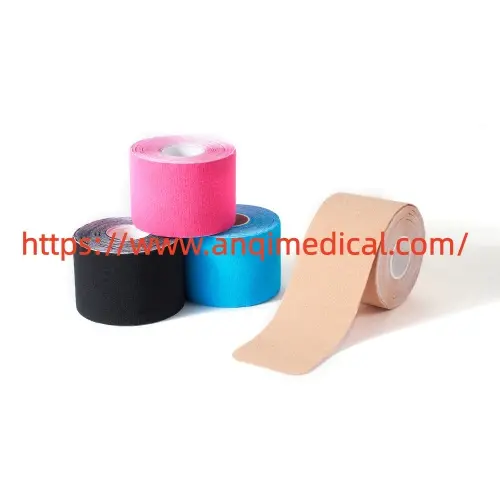
Sports Adhesive Tapes are used across many athletic settings where temporary external support, fixation, or body area protection may be required. Running, basketball, football, volleyball, tennis, weight training, and other activities involve different movement patterns, so one specification may not suit every situation. Recent industry discussions continue to compare rigid and elastic constructions because each format offers a different balance between movement and restriction.
Running places repeated demands on the lower body. Ankles, knees, feet, and calves move continuously through each training session. A flexible construction can be considered when users want a product that follows natural movement. The width and elasticity also deserve attention because an application around a smaller area may require a different format from one covering a larger section.
Court activities create another set of requirements. Basketball, volleyball, and tennis involve jumping, landing, rapid direction changes, and repeated arm movement. Ankle and wrist applications are common considerations, while fingers and thumbs may also require targeted support during ball handling. Current sports guidance shows that rigid formats are often selected when movement restriction is part of the intended application, while flexible versions can be considered when greater freedom of movement is needed.
Football and rugby involve frequent changes in direction and physical contact. In these environments, product construction can influence how well a wrap remains positioned during activity. Users may consider cotton backing, adhesive characteristics, tearability, width, and application method. A narrow format can be convenient around fingers and thumbs, while broader formats can be considered for larger joint areas.
Strength training has its own requirements. Weightlifters and fitness users may focus on the wrists, thumbs, and hands because these areas interact directly with bars, handles, and other equipment. A firm material can be useful for applications where controlled movement is desired, while a more flexible option may be considered when users want greater freedom during repeated exercises.
Material selection is therefore an important part of product development. Cotton constructions can offer a familiar textile feel, while elastic materials can follow movement more easily. Adhesive formulation also matters because the product needs to remain positioned during intended use without creating unnecessary discomfort. For manufacturers, testing should consider adhesion, flexibility, tearing behavior, moisture exposure, and removal characteristics.
Body area is another factor that should not be overlooked. Fingers and thumbs are relatively small and require precise placement. Wrists and ankles have more surface area and experience frequent movement. Knees and shoulders involve larger contours and broader ranges of motion. These differences create practical reasons for manufacturers to provide multiple widths and roll lengths rather than relying on one universal format.
Skin preparation can also influence application. Clean and dry skin generally provides a more suitable surface than skin covered with lotion, oil, or excessive moisture. Users should follow the instructions supplied with the specific product and avoid applying material over damaged skin unless appropriate professional guidance has been provided.
For team buyers, packaging is another purchasing consideration. Sports clubs, training facilities, clinics, retailers, and distributors may require different quantities and presentation formats. Individual rolls can suit personal use, while multipack configurations may be convenient for teams or professional settings. Private label packaging can also help distributors create product lines suited to their target markets.
Anqimedical focuses on product development for customers seeking practical solutions for different athletic applications. Attention to backing materials, adhesive formulation, dimensions, packaging, and customization can help buyers select products according to their intended market. For wholesale customers, specification flexibility can also make it easier to build a product range around different sports and user groups.
Manufacturers also need to consider how products behave during real activity. A runner may need flexibility over repeated movement, while a contact athlete may have different requirements around fixation. A weight training user may focus on hand and wrist applications, while a tennis player may have different preferences around elbow or shoulder areas. These differences show why application focused development can be useful when creating products for multiple markets.
For buyers, a practical evaluation can begin with several questions. What body area will be covered? How much movement is involved? Is flexibility required? Is temporary fixation needed? What width is appropriate? How will the material be removed? What packaging quantity fits the intended sales channel? These questions can help narrow the available options without relying on broad claims.
Another consideration is user education. Clear instructions can help customers understand preparation, application, wearing conditions, and removal. This is particularly relevant for retailers and distributors because straightforward product information can reduce confusion at the purchasing stage. Products intended for professional environments should also be accompanied by appropriate technical documentation and usage guidance.
Anqimedical provides product and manufacturing information for customers evaluating different configurations and application needs. Buyers interested in specifications, customization, packaging, and available product options can review the product range at https://www.anqimedical.com/product/